How to Generate SEO and Website Design Leads Automatically: A Complete Guide to Automated Lead Generation
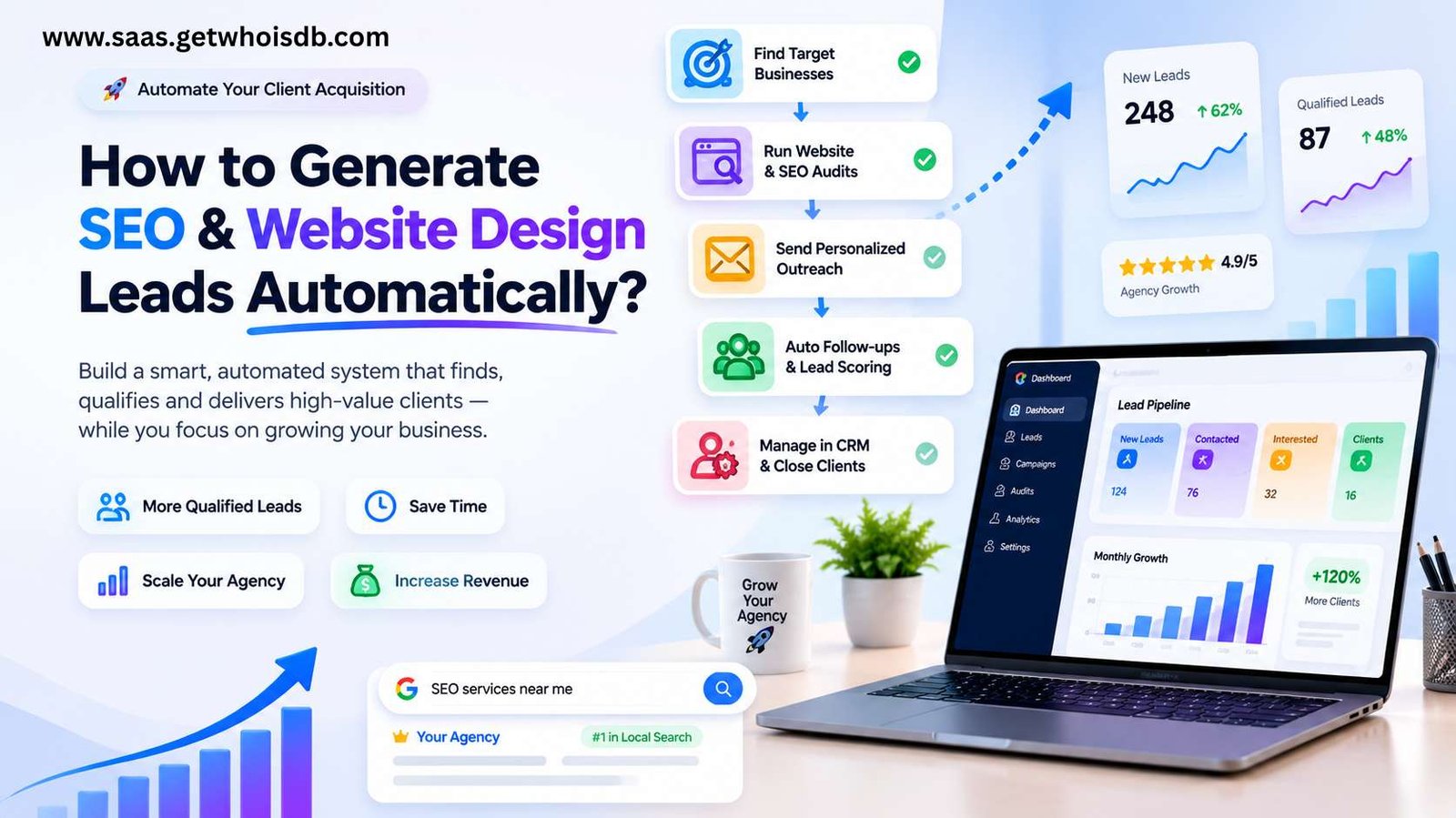
Generating consistent leads for SEO and website design services can be challenging when you're relying entirely on cold calls, manual prospecting, or referrals. The good news is that you can automate a large part of the process by combining SEO tools, lead databases, website audits, personalized outreach, CRM automation, and email marketing.
This guide explains how agencies and freelancers can build an automated lead-generation system that continuously finds potential clients, identifies their needs, and moves qualified prospects into your sales pipeline—without manually searching for every lead.
The process starts with identifying businesses that are likely to need SEO or website design services. You can target companies with outdated websites, poor search rankings, slow-loading pages, missing SEO elements, weak mobile experiences, or limited online visibility. Instead of contacting businesses randomly, automation allows you to build a targeted prospect list based on specific requirements.
Once prospects are identified, website and SEO audit tools can automatically analyze their websites. These audits can highlight issues such as broken links, missing meta descriptions, poor page speed, weak content optimization, mobile usability problems, and technical SEO issues. These insights become valuable talking points for personalized outreach.
The next step is automated outreach. Instead of sending the same generic message to everyone, create email templates that dynamically include information about each prospect. For example, an email could mention a specific SEO issue found on the prospect's website and offer a free audit or consultation. Personalized messages are generally more useful because they immediately demonstrate that you understand the prospect's business.
You can also automate follow-ups. Many potential clients don't respond to the first email, even when they are genuinely interested. A simple sequence can send a second message after a few days, followed by another reminder later. Prospects who reply or show strong interest can automatically be moved into your CRM for personal follow-up.
A powerful automated system can look like this:
Lead Database → Website/SEO Audit → Lead Scoring → Personalized Email → Automated Follow-ups → CRM → Sales Call → Client
Lead scoring is another important part of the system. Instead of treating every prospect equally, assign higher scores to businesses with strong buying signals. For example, a company with an outdated website, high-value services, active advertising campaigns, and poor organic rankings could be considered a high-priority prospect.
You can also create separate campaigns for different services. Website design prospects might receive messages focused on outdated layouts, mobile responsiveness, speed, or conversion optimization. SEO prospects can receive messages focused on rankings, technical issues, keyword opportunities, backlinks, and content gaps. This segmentation makes your outreach much more relevant.
Another effective strategy is combining automated prospecting with inbound lead generation. Your own agency website should target keywords related to SEO services, web design, local SEO, e-commerce development, and other services you provide. Visitors can then be converted through contact forms, free audits, downloadable resources, or consultation offers.
The goal isn't to automate every part of sales. Instead, automate the repetitive work and let your team focus on conversations and closing deals.
A well-designed automation system can continuously discover new prospects, analyze websites, personalize outreach, send follow-ups, organize leads, and notify you when someone becomes interested.
Final Thoughts
Automated lead generation can turn SEO and website design sales from a manual prospecting process into a repeatable system. The most effective approach combines accurate prospect data, useful website audits, personalized outreach, intelligent follow-ups, and human sales conversations.
Automation doesn't replace good sales—it gives your sales team more opportunities to have the right conversations with the right businesses at the right time.