The "Broken Website" Method: How to Find Web Design Clients in 2026
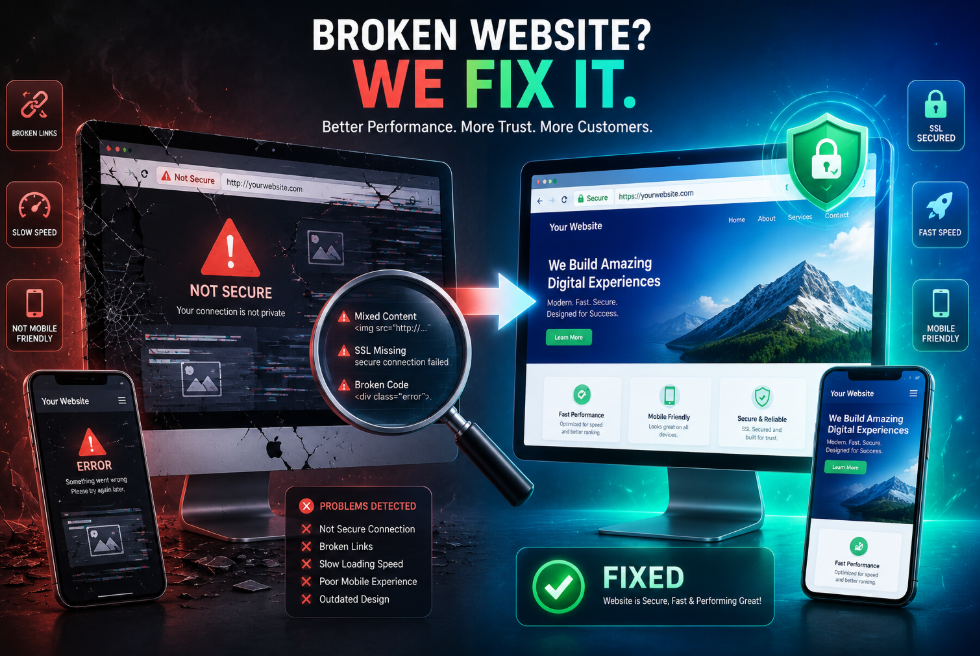
Most web designers spend hours cold emailing businesses that don't need their services. They pitch redesigns to companies with perfectly functional websites and wonder why their conversion rates are so low.
There's a better way.
Instead of chasing businesses that don't need you, find the ones with broken, outdated, or non-existent websites. These are the businesses actively losing customers right now, and they don't even know it.
This is the "broken website" method. Here's exactly how to use it.
What Makes a Website "Broken"?
A broken website isn't just one that returns a 404 error. In the context of web design lead generation, a "broken" site has serious issues that cost the business customers and revenue.
Here are the most common broken website signals:
No HTTPS or invalid SSL certificate - Browsers show visitors a "Not Secure" warning, and many leave immediately
Not mobile responsive - Over 60% of local business searches happen on mobile, yet many sites aren't set up for phones and require visitors to pinch and zoom
Outdated copyright dates - A copyright year from 2016 or earlier makes visitors wonder if the business is still operating
Slow loading times - TTFB over 1 second, page weight over 3MB, or too many requests
Dated technology - Flash-era animations, old site builders, or cookie-cutter themes that scream "I built this myself years ago"
Missing or parked website - The domain exists but there's no live site or only a placeholder
Each of these issues represents a specific opportunity to start a conversation. When you approach a business owner and say, "I noticed your site isn't working well on phones, and you're losing customers because of it," you're not selling, you're offering to solve a problem.
How to Find Broken Websites at Scale
1. Use Google Maps for Local Prospecting
Google Maps is a free goldmine for finding local businesses with broken websites. Here's the workflow:
Search for businesses in your target industry and location. Look for:
No website link - These businesses rely solely on social media or listing pages
"Website" link that doesn't work - The domain might be parked or redirecting to a dead page
Businesses with unclaimed or incomplete Google Business Profiles - This often indicates a neglected online presence
Tools like MapMons help you automate this process. They check every website linked from Maps, calculate a health score, and assign verdicts like "Goldmine" (strong reviews but no dedicated website), "Site Down" (the website doesn't load), or "Digital Fossil" (strong dated-technology signals).
2. Use Automated Website Audit Tools
If you already have a list of domains, you can audit them in bulk using lead generation and prospecting automation tools like Apify. These tools check:
SSL certificate validity
Mobile responsiveness
Page speed metrics
Copyright freshness
Platform detection
Every site starts at 100 points and loses points for each problem found. The audit results tell you exactly which businesses need your services and why.
| Category | Max Deduction | What It Checks |
|---|---|---|
| Security & Trust | 25 | No HTTPS, invalid certificate, mixed content |
| Mobile Experience | 25 | Not phone-ready, content overflow, cramped tap targets |
| Freshness & Tech Debt | 25 | Flash, old site builders, outdated copyright |
| Performance | 25 | Slow TTFB, heavy page weight, too many requests |
3. Monitor New Domain Registrations
Businesses that just registered their domains are in setup mode. They need hosting, a website, and the tools to run their business online. By pulling WHOIS data and filtering for domains registered in the last 7-30 days, you can generate SEO leads and website design leads before competitors reach them.
4. Check for Non-Existent or Parked Domains
Some businesses have domains but no live sites. They might have purchased the domain years ago and parked it, or their previous site went down and they never rebuilt it. These are some of the easiest website development leads to convert, they already know they need a website; they just haven't acted yet.
How to Convert Broken Website Leads
1. Lead with the Problem, Not the Solution
Most business owners don't understand technical issues like "viewport missing" or "SSL certificate expired." But they understand "Your website isn't showing up in Google searches" or "Visitors are getting a security warning when they visit your site."
When you find a broken website, don't pitch a redesign immediately. Instead, identify the specific problem and explain why it matters in plain English. For example:
"Your site doesn't have HTTPS, so Google is showing a 'Not Secure' warning to every visitor. That's probably costing you 30% of your potential customers."
"Your website loads at desktop size on phones, so customers have to pinch and zoom to read anything. Most people just give up and call a competitor."
2. Offer a Free, Instant Website Audit
Automated website audits are powerful lead magnets because they provide immediate value while demonstrating your expertise. When prospects receive their audit results, they see exactly what's wrong with their website and that you're the person who can fix it.
Create a simple landing page where business owners can enter their domain and receive a detailed report. Then reach out to broken website owners and say, "I ran a free audit on your site and found 7 issues that are costing you customers. Would you like to see the report?"
3. Use the "Hand-Raiser" Funnel
The most powerful way to generate web design leads is to attract "hand-raisers", prospects who proactively express interest by giving you their contact information. These are considered "warm" prospects who are easier to convert because they've already shown interest in your solution.
Here's how to build a hand-raiser funnel for web design leads:
Create valuable content that answers common questions about website problems. For example, a blog post titled "Is Your Website Costing You Customers? 7 Signs You Need a Redesign" attracts business owners who suspect their site might have issues. Add a simple call-to-action: "Get a free website audit to find out exactly what's wrong with your site."
When visitors enter their domain for the audit, they become hand-raisers, they've shown interest and provided their contact information. From there, nurture them with targeted emails that address their specific issues and lead toward a consultation.
The key is that you're not chasing cold leads; you're capturing prospects who are already looking for a solution.
4. Build a Simple Referral Engine
Once you convert a broken website lead, ask for referrals immediately. At project handoff, when client satisfaction is highest, ask: "Who else in your network has a website that might need similar help?" This works because happy clients are eager to share their experience.
Offer incentives for successful referrals, such as discounts on future services or free website maintenance for 3 months. This system creates a self-sustaining stream of website development leads.
Why This Method Works
The broken website method works for three reasons:
1. Less Competition - Most designers chase businesses with existing websites. The broken website market is far less crowded, because many designers don't know how to find these opportunities systematically.
2. Higher Conversion Rates - When you lead with a specific problem the prospect didn't know they had, you're offering value, not just selling. You're solving a real business problem, lost revenue from customers who can't view their site properly on mobile, or missed sales from visitors who get security warnings.
3. More Authority - You're not just another person selling websites. You're a consultant who can identify what's wrong and fix it. This positions you as an expert, not a commodity.
Start Finding Broken Websites Today
Generating web design leads through the broken website method is simple:
Use Google Maps to find local businesses
Check their website for common issues
Document specific problems
Reach out with a personalized, problem-focused offer
Follow up systematically
The tools exist. The data is available. And hundreds of thousands of businesses have websites that are actively costing them customers. The only question is: will you find them, or will a competitor beat you to it?
Ready to generate SEO leads and website design leads at scale? GetWhoisDB helps you find prospects through domain intelligence, automated website audits, and conditional email campaigns, all from one dashboard. Start your free trial today.